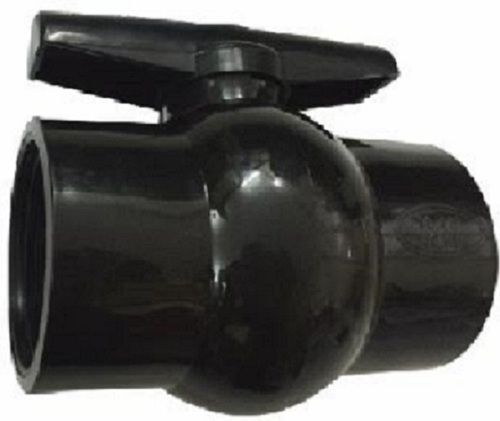
About Single P.C Ball Valve
A ball valve is a flow control device which uses a hollow, perforated and pivoting ball to control fluid flowing through it. It is open when the ball's hole is in line with the flow inlet and closed when it is pivoted 90-degrees by the valve handle, blocking the flowVersatile Fluid Flow ControlThis ball valve is engineered for reliability across plumbing, agricultural, and industrial environments. Suitable for water, oil, and gas systems, its manual quarter-turn operation ensures precise flow control. Its corrosion-resistant polypropylene build assures longevity, even in chemically aggressive applications. With ISI compliance and PTFE sealing, leakage risks are minimized, and maintenance demands are kept low.
Durable and Efficient DesignManufactured using high-quality polypropylene, the valve is lightweight yet robust. The glossy white finish resists stains, while the color-coded handle (blue or red) distinguishes hot or cold fluid use. Its threaded BSP female end connection allows easy installation, and the valve can be mounted either horizontally or vertically, granting flexibility for various system layouts.
FAQ's of Single P.C Ball Valve:
Q: How do I install the Single P.C Ball Valve in my plumbing system?
A: The valve features BSP female threaded end connections, allowing quick installation with compatible pipes. Simply screw the valve onto the cleaned, matching male threads, ensuring the use of proper sealant or Teflon tape to avoid leaks. It can be mounted in either horizontal or vertical positions, according to system requirements.
Q: What fluids and applications is this valve suitable for?
A: This ball valve is ideal for controlling the flow of water, oils, and gases in domestic plumbing, agricultural irrigation, and various industrial setups. Its chemical resistance and PTFE seals make it especially suitable for systems carrying corrosive or abrasive fluids.
Q: When should I use a polypropylene ball valve instead of a metal one?
A: Choose polypropylene ball valves when working with mildly corrosive fluids, in environments where weight reduction is important, or where chemical resistance and maintenance-free operation are desired. It is particularly advantageous in agricultural and chemical processing applications.
Q: Where can I use this valve within my facility?
A: The valve can be applied to any section handling fluid flow within pressure and temperature limits (up to 10 kg/cm2 and 70C). Its compact straight form fits line-based setups in plumbing, irrigation fields, or industrial plants, ensuring seamless integration into pipelines.
Q: What is the process for operating the valve?
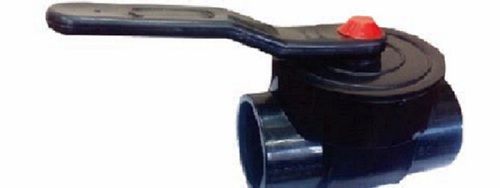
A: The valve utilizes a quarter-turn lever handle. To open, rotate the handle 90 degrees, aligning it with the pipe direction; to close, turn it perpendicular to the pipe. This manual mechanism provides simple, quick, and reliable control over fluid flow.
Q: How often does the valve require maintenance?
A: Thanks to its polypropylene construction and PTFE seal, the valve is inherently resistant to corrosion and most chemicals, reducing maintenance needs. Periodic external cleaning and inspection for mechanical wear are recommended, but internal servicing is rarely required.
Q: What are the key benefits of using this ball valve?
A: Key advantages include lightweight design, manual and precise flow control, chemical and corrosion resistance, low maintenance needs, smooth glossy finish, and compliance with ISI standards. Its versatility covers applications in plumbing, agriculture, and industry, providing dependable performance across sectors.





 English
 Spanish
 French
 German
 Italian
 Chinese (Simplified)
 Japanese
 Korean
 Arabic
 Portuguese
 Send Inquiry